
End suction pumps are among the most widely used centrifugal pumps in the world. They are commonly installed in residential buildings, commercial facilities, industrial plants, HVAC systems, irrigation projects, and municipal water supply networks. Their simple design, reliable performance, and ease of maintenance make them a preferred solution for transferring clean water and other non-aggressive liquids.
Understanding how an end suction pump works helps engineers, contractors, facility managers, and building owners choose the right pump and maintain it for long-term, efficient operation.
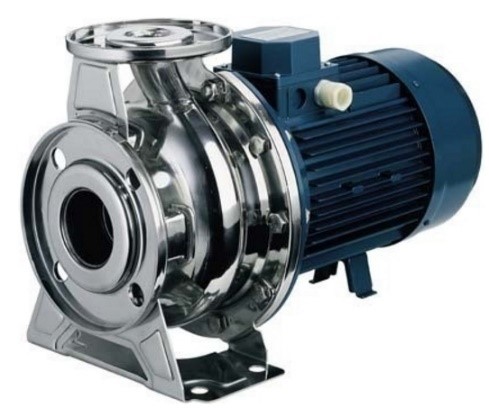
What Is an End Suction Pump?
An end suction pump is a single-stage centrifugal pump where the liquid enters the pump through the front (end) of the pump casing and exits vertically through the discharge outlet. The pump converts the mechanical energy produced by the electric motor into hydraulic energy, allowing water to flow efficiently through a piping system.
End suction pumps are commonly manufactured in cast iron or stainless steel and are available in close-coupled and long-coupled designs.
Main Components of an End Suction Pump
Understanding the main components helps explain how the pump operates.
Pump Casing
The casing houses the impeller and directs the flow of water through the pump. It converts the velocity created by the impeller into pressure.
Impeller
The impeller is the rotating component responsible for moving water. As it spins at high speed, it creates centrifugal force that pushes the liquid outward.
Shaft
The shaft connects the impeller to the electric motor and transfers rotational power.
Mechanical Seal
The mechanical seal prevents water leakage where the shaft passes through the pump casing.
Bearings
Bearings support the rotating shaft and reduce friction during operation.
Electric Motor
The motor supplies the mechanical power required to rotate the impeller.
Working Principle of an End Suction Pump
The operation of an end suction pump follows a simple and efficient process:
Step 1 – Water Enters the Pump
Water enters through the suction inlet located at the front of the pump.
Step 2 – The Impeller Rotates
The electric motor rotates the impeller at high speed.
Step 3 – Centrifugal Force Is Generated
As the impeller spins, centrifugal force pushes the water from the center of the impeller toward its outer edges.
Step 4 – Pressure Increases
The pump casing collects the high-velocity water and converts much of its velocity into pressure energy.
Step 5 – Water Leaves the Pump
The pressurized water exits through the discharge outlet and flows into the piping system to serve the required application.
Simple Flow Diagram
Water Source
      │
      ▼
Suction Pipe
      │
      ▼
End Suction Inlet
      │
      ▼
Rotating Impeller
      │
      ▼
Pump Casing
      │
      ▼
Discharge Outlet
      │
      ▼
Pipeline
      │
      ▼
Destination
Why Is It Called an End Suction Pump?
The name comes from the location of the inlet.
- The liquid enters from the front (end) of the pump.
- The discharge outlet is positioned on the top of the casing.
This configuration allows straightforward piping and easy maintenance.
Advantages of End Suction Pumps
High Efficiency
Modern hydraulic designs deliver excellent flow with lower energy consumption.
Simple Construction
Fewer moving parts make installation, operation, and maintenance easier.
Cost-Effective
End suction pumps offer an economical solution for many water transfer applications.
Easy Maintenance
Many models feature a back pull-out design, allowing maintenance without removing the pump casing from the piping.
Wide Range of Sizes
Available for small residential systems through to large industrial applications.
Common Applications
End suction pumps are used in:
Commercial Buildings
- Water supply
- Pressure boosting
- Office buildings
- Shopping centres
Industrial Plants
- Process water
- Cooling water
- Manufacturing
- Utility services
HVAC Systems
- Chilled water circulation
- Cooling towers
- Heating systems
- Air conditioning
Agriculture
- Irrigation
- Water transfer
- Sprinkler systems
Municipal Projects
- Water distribution
- Public infrastructure
- Community water supply
Types of End Suction Pumps
Close-Coupled Pumps
The impeller is mounted directly on the motor shaft, creating a compact design.
Long-Coupled Pumps
The pump and motor are connected by a coupling, making maintenance easier for larger installations.
Stainless Steel End Suction Pumps
Ideal for potable water, food processing, and mildly corrosive liquids.
Cast Iron End Suction Pumps
Suitable for general water transfer, HVAC, and industrial services.
Factors Affecting Pump Performance
Several factors influence the performance of an end suction pump:
- Flow rate
- Total Dynamic Head (TDH)
- Motor speed
- Impeller diameter
- Pipe size
- Suction conditions
- Water temperature
- System resistance
Correct sizing ensures efficient and reliable operation.
Common Problems
Some common issues include:
Cavitation
Occurs when insufficient pressure at the pump inlet causes vapor bubbles to form and collapse, damaging the impeller.
Air Leaks
Air entering the suction line reduces pump efficiency and may prevent proper priming.
Seal Leakage
Mechanical seals wear over time and should be inspected regularly.
Bearing Wear
Worn bearings can cause vibration, noise, and shaft misalignment.
Low Flow
Usually caused by blocked strainers, worn impellers, incorrect pump sizing, or partially closed valves.
Maintenance Tips
Regular maintenance helps extend pump life and reduce downtime.
- Inspect mechanical seals.
- Check bearing condition.
- Monitor vibration levels.
- Verify operating pressure.
- Check motor current.
- Lubricate bearings where applicable.
- Clean suction strainers.
- Tighten mounting bolts.
- Inspect couplings and alignment.
- Replace worn components promptly.
Why Choose Ebara End Suction Pumps?
Ebara end suction pumps are trusted worldwide for their:
- High hydraulic efficiency
- Stainless steel construction (selected models)
- Reliable mechanical seals
- Durable performance
- Low maintenance requirements
- Long service life
- Wide range of capacities
- Energy-efficient operation
These pumps are widely used across commercial buildings, industrial facilities, HVAC systems, water treatment plants, and irrigation projects throughout the UAE.
Why Buy from DXB Solutions LLC?
DXB Solutions LLC supplies genuine Ebara end suction pumps and provides complete pumping solutions across the UAE.
We offer:
- Genuine Ebara products
- Expert pump selection
- Technical consultation
- Installation support
- Genuine spare parts
- Preventive maintenance services
- Fast delivery across the UAE
- Competitive pricing
End suction pumps are one of the most versatile and dependable pumping solutions available. Their straightforward centrifugal operating principle, efficient performance, and ease of maintenance make them suitable for a wide range of residential, commercial, industrial, and municipal applications.
Whether you need a pump for water supply, HVAC, irrigation, or industrial processes, selecting the correct end suction pump and maintaining it properly will ensure reliable performance for many years.
Frequently Asked Questions (FAQs)
1. What is the working principle of an end suction pump?
An end suction pump uses centrifugal force generated by a rotating impeller to move water from the suction inlet to the discharge outlet while increasing its pressure.
2. Why is it called an end suction pump?
The pump is called an end suction pump because the liquid enters through the front end of the pump casing, while the discharge outlet is located on the top.
3. What liquids can an end suction pump handle?
End suction pumps are primarily designed for clean water and non-aggressive liquids. Some specialized models can handle mildly corrosive fluids depending on the pump materials.
4. Where are end suction pumps commonly used?
They are widely used in water supply systems, HVAC installations, irrigation, industrial processes, commercial buildings, and municipal water distribution.
5. How can I improve the efficiency of an end suction pump?
Correct pump sizing, proper installation, regular maintenance, clean suction conditions, and operating the pump close to its Best Efficiency Point (BEP) will help maximize efficiency and extend service life. For more info contact Ebara Pump Suppliers in UAE or call us at +971 4 2522966.