
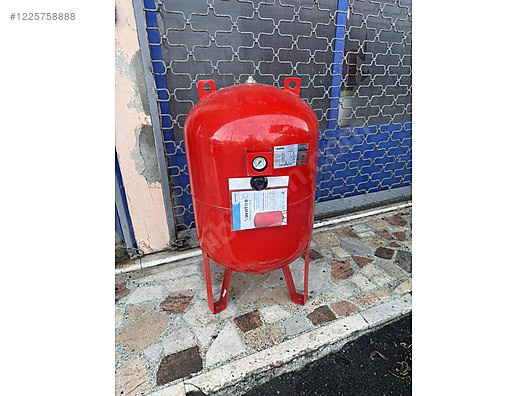
A Wates pressure vessel helps maintain stable water pressure, store a usable quantity of pressurized water and reduce frequent starting and stopping of water pumps. Pressure vessels are commonly installed with booster pumps and water supply systems in residential, commercial and industrial applications.
But how does a Wates pressure vessel actually work?
In simple terms, the vessel uses compressed air to store energy. When a pump fills the vessel with water, the air inside is compressed. When water is required, this compressed air pushes the stored water back into the piping system.
This guide explains the Wates pressure vessel working principle, the role of the membrane or bladder, pre-charge pressure and how the vessel works together with a booster pump.
What Is a Wates Pressure Vessel?
A Wates pressure vessel is a pressurized vessel used as part of a water pumping system.
Depending on the vessel design, water is separated from the compressed air by a flexible membrane or bladder.
The vessel essentially contains two regions:
- Water side – connected to the water system
- Air side – contains compressed air
The compressed air acts like a spring.
As water enters the vessel, the air is compressed. When water leaves the vessel, the compressed air expands and pushes the water into the system.
Main Components of a Pressure Vessel
A typical pressure vessel includes several important components.
Steel Vessel Body
The external vessel body is designed to contain the internal pressure safely within its specified operating limits.
Membrane or Bladder
The flexible membrane separates the water from the compressed air.
This allows the air cushion to compress and expand as water enters and leaves the vessel.
Air Valve
An air valve allows the vessel’s pre-charge pressure to be checked and adjusted.
Water Connection
The vessel is connected to the booster pump discharge or pressurized water system through its water connection.
How Does a Wates Pressure Vessel Work?
The operating cycle can be understood in five stages.
Stage 1 – Vessel Pre-Charge
Before the water system is pressurized, the vessel contains compressed air at a specified pre-charge pressure.
For example:
Pump start pressure: 3.0 bar
Illustrative pre-charge: 2.8 bar
The exact pre-charge setting should follow the pressure vessel and booster pump manufacturer’s recommendations.
The pre-charge creates the air cushion required for proper vessel operation.
Stage 2 – Booster Pump Starts
When water is consumed, system pressure falls.
Once pressure reaches the pump’s configured starting point, the booster pump starts.
For example:
Pump start pressure = 3 bar
The pump begins supplying water to the system.
When pump capacity exceeds the immediate water demand, part of the water can enter the pressure vessel.
Stage 3 – Water Enters the Pressure Vessel
As water enters the vessel, it causes the internal air cushion to compress.
Imagine the air acting like a spring:
More water enters → air volume decreases → air pressure increases
The energy produced by compressing the air is effectively stored in the vessel.
As the pump continues operating, system pressure rises.
Stage 4 – Pump Reaches Stop Pressure
Suppose the booster pump is configured as:
Start pressure: 3 bar
Stop pressure: 5 bar
As the pump fills the system and pressure vessel, pressure increases until approximately 5 bar.
The controller then stops the pump.
At this stage, the vessel contains a quantity of water under pressure.
The compressed air is ready to push this water back into the piping system when demand occurs.
Stage 5 – Water Is Supplied from the Vessel
Now imagine someone opens a tap.
Water demand begins.
Instead of the pump necessarily starting immediately, the compressed air inside the pressure vessel expands and pushes stored water into the system.
The sequence is:
Tap opens → water leaves vessel → air expands → system pressure gradually decreases
When pressure eventually reaches the pump’s starting pressure, the booster pump starts again.
The cycle then repeats.
Simple Wates Pressure Vessel Working Cycle
The complete cycle can be summarized as:
1. Pump starts
↓
2. Water enters pressure vessel
↓
3. Air is compressed
↓
4. System reaches stop pressure
↓
5. Pump stops
↓
6. Water demand begins
↓
7. Compressed air pushes water out
↓
8. System pressure decreases
↓
9. Pump reaches start pressure
↓
10. Pump starts again
This process happens automatically during normal booster pump operation.
Why Is Compressed Air Required?
Water itself is effectively incompressible for practical booster-system operation.
Air, however, can be compressed.
This is why the pressure vessel requires an air cushion.
The compressed air stores energy while the pump is operating and releases that energy as water is discharged from the vessel.
Without a functioning air cushion, the vessel cannot provide its intended drawdown effectively.
What Is Pressure Vessel Drawdown?
Drawdown is the amount of usable water that can leave the pressure vessel between the pump’s stop pressure and its restart pressure.
For example:
Nominal vessel volume: 300 litres
This does not mean that the vessel provides 300 litres of usable water.
Only part of its total volume is available as drawdown because space is required for the compressed air.
Actual drawdown depends on:
- Vessel capacity
- Pre-charge pressure
- Pump start pressure
- Pump stop pressure
- Vessel design
Therefore, nominal vessel capacity and usable water capacity should not be confused.
Why Does a Pressure Vessel Reduce Pump Cycling?
Consider a booster pump without adequate buffer capacity.
A small water demand—such as briefly opening a tap—can cause pressure to fall quickly and trigger the pump.
Repeated small demands can therefore lead to frequent starting and stopping.
With a correctly selected pressure vessel, small water demands can initially be supplied from the stored pressurized water.
The pump starts only after system pressure reaches its configured start point.
This can reduce the number of pump starts.
Why Is Frequent Pump Cycling a Problem?
Excessive starting and stopping can place additional stress on:
- Pump motors
- Contactors
- Electrical components
- Bearings
- Mechanical seals
- Pump control equipment
Correct pressure vessel sizing can therefore contribute to more reliable booster pump operation.
How Does a Wates Pressure Vessel Work with a Single Booster Pump?
In a conventional single-pump system, the pressure vessel works between the pump’s start and stop pressure.
For example:
Pump starts: 3 bar
Pump stops: 5 bar
The vessel stores water as pressure rises toward 5 bar.
After the pump stops, the vessel supplies water as pressure falls.
When pressure reaches approximately 3 bar, the pump starts again.
How Does It Work with a Twin Booster Pump?
A twin booster system may operate as:
- Duty/standby
- Duty/assist
- Alternating pumps
- Staged pumps
The pressure vessel helps stabilize system pressure and handle small demands while the booster controller determines when pumps should start, stop or stage.
The exact operation depends on the control logic.
How Does a Pressure Vessel Work with a VFD Booster Pump?
A Variable Frequency Drive (VFD) booster pump operates differently from a conventional fixed-speed pump.
The VFD changes motor speed according to demand to maintain the required system pressure.
The pressure vessel can still perform useful functions such as:
- Handling very small water demands
- Stabilizing pressure
- Reducing unnecessary starts
- Absorbing pressure fluctuations
- Supporting smooth control response
Because VFD systems operate differently, their pressure vessel requirements can be different from conventional start/stop booster systems.
The vessel should therefore be selected according to the pump and VFD manufacturer’s recommendations.
What Is Pre-Charge Pressure?
Pre-charge is the air pressure inside the vessel before the water side is pressurized.
It is an important setting because it directly affects vessel operation and drawdown.
For many conventional booster systems, pre-charge is set slightly below the pump’s cut-in or start pressure.
For example:
Pump start: 3.0 bar
Possible pre-charge: 2.8 bar
This is only an illustrative example.
Always follow the manufacturer’s recommended pre-charge setting for the specific pressure vessel and pumping system.
What Happens If Pre-Charge Is Too High?
If the pre-charge is incorrectly set too high relative to the system settings, the vessel may accept insufficient water or operate poorly across the intended pressure range.
Possible symptoms include:
- Reduced effective drawdown
- Unstable pressure
- Frequent pump operation
- Poor system performance
What Happens If Pre-Charge Is Too Low?
An excessively low pre-charge can also reduce useful vessel performance and may cause the bladder or membrane to operate outside its intended conditions.
Possible symptoms can include:
- Reduced effective drawdown
- Frequent pump cycling
- Poor pressure stability
- Increased membrane stress
This is why correct pre-charge is essential.
How to Check Pressure Vessel Pre-Charge
The basic procedure is generally:
- Switch off the pump.
- Isolate the pressure vessel/system as required.
- Relieve the water pressure.
- Ensure the water side is fully depressurized.
- Measure air pressure at the air valve.
- Compare the reading with the required pre-charge.
- Adjust according to the manufacturer’s instructions.
Do not simply check the air valve while the vessel remains fully pressurized with water and assume that reading represents the true pre-charge.
How to Know If a Pressure Vessel Is Not Working Properly
Common symptoms can include:
- Pump starting and stopping very frequently
- Large or unusual pressure fluctuations
- Very little usable water between pump cycles
- Loss of air pre-charge
- Water appearing at the air valve
- Pump starting immediately after small water demand
Water coming from the air valve can indicate a membrane or bladder problem, depending on the vessel construction.
The vessel should be inspected before continuing operation if a fault is suspected.
Wates Pressure Vessel Sizes
Wates pressure vessels are available in different capacities for various pumping applications.
Depending on the required model range, capacities can include:
- 60 litres
- 100 litres
- 200 litres
- 300 litres
- 500 litres
- 750 litres
- 1000 litres
- 1500 litres
The correct size should be selected according to pump flow, required drawdown, pressure settings and control method rather than building size alone.
Wates Pressure Vessel Pressure Ratings
Different applications can also require different vessel pressure ratings, such as:
10 bar – commonly considered for conventional water pressure systems operating within the vessel’s permitted limits.
16 bar – suitable for appropriately designed higher-pressure applications.
25 bar – intended for systems requiring a higher pressure rating.
The vessel rating must be suitable for the maximum pressure it can experience, considering pump shut-off pressure, static pressure and possible transient conditions.
Wates Pressure Vessel Supplier in UAE
DXB Solutions LLC supplies Wates pressure vessels for booster pump and water pressure systems in the UAE.
Pressure vessels are available in different capacities and pressure ratings for residential, commercial and industrial applications.
Our team can assist with pressure vessel selection based on:
- Pump flow
- Pump head
- Start and stop pressure
- Required drawdown
- Number of pumps
- Fixed-speed or VFD control
- Required pressure rating
DXB Solutions LLC serves customers in Dubai, Sharjah, Ajman, Abu Dhabi, Ras Al Khaimah, Fujairah and across the UAE.
Conclusion
A Wates pressure vessel works by using compressed air to store and release energy.
When the booster pump operates, water enters the vessel and compresses the air. When water demand occurs, the compressed air expands and pushes stored water back into the system.
Once pressure falls to the pump’s start setting, the booster pump operates again and recharges the vessel.
This simple working principle helps stabilize water pressure, provide useful drawdown and reduce unnecessary pump cycling.
Correct vessel sizing and pre-charge settings are essential for achieving the intended performance. For more info contact Wates Pressure Vessel Supplier in UAE or call us at +971 4 2522966.