
Selecting the right Wates pressure vessel is essential for maintaining stable water pressure, reducing frequent pump starts and improving the performance of water booster pump systems. Whether the application is a residential villa, commercial building, hotel or industrial facility, choosing the correct pressure vessel capacity and pressure rating helps ensure reliable operation.
Wates pressure vessels are available in different capacities and pressure ratings, including 10 bar, 16 bar and 25 bar models. Understanding the relationship between pump flow, operating pressure, vessel capacity and system requirements is important before making a purchase.
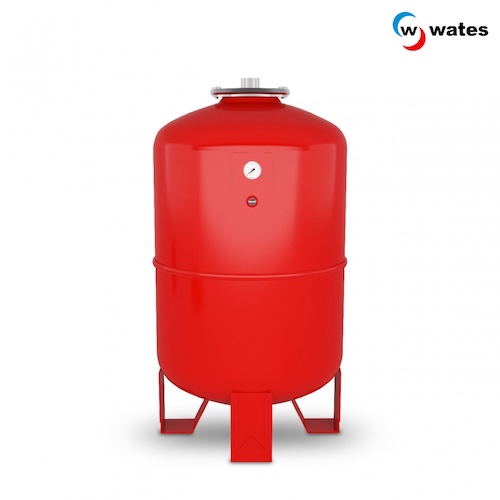
In this guide, we explain how to choose the right Wates pressure vessel for water pump and booster pump applications in the UAE.
1. Understand the Purpose of a Wates Pressure Vessel
A Wates pressure vessel is used in water supply systems to store water under pressure and reduce unnecessary pump cycling.
The vessel contains an air cushion separated from the water by a flexible membrane or bladder.
When the pump operates, water enters the vessel and compresses the air. When water is consumed, the compressed air pushes water back into the system.
This arrangement provides several benefits:
- Maintains more stable water pressure.
- Reduces frequent pump starts and stops.
- Provides temporary pressurized water storage.
- Helps reduce pressure fluctuations.
- Reduces mechanical and electrical stress on pumps.
- Supports efficient booster pump operation.
2. Determine the Required Pressure Vessel Capacity
One of the most important considerations when selecting a Wates pressure vessel is its capacity.
Pressure vessels are available in different sizes, including:
| Wates Vessel Capacity | Potential Applications |
|---|---|
| 60 litres | Small water pressure systems |
| 100 litres | Residential booster pump systems |
| 200 litres | Villas and small commercial installations |
| 300 litres | Residential and commercial booster systems |
| 500 litres | Larger booster pump installations |
| 750 litres | Commercial water supply systems |
| 1000 litres | Large commercial pumping systems |
| 1500 litres | Industrial and large-scale booster systems |
Important: These applications are general examples, not fixed sizing recommendations. The correct vessel capacity depends on the pump flow, operating pressure, control method and required drawdown volume.
A large building does not automatically require a large pressure vessel. Similarly, a smaller installation may require a larger vessel when the pump operates with conventional start-and-stop controls.
3. Check the Booster Pump Flow Rate
Pump flow rate plays an important role in pressure vessel selection.
Flow rate is normally expressed in:
- Litres per minute (L/min)
- Litres per second (L/s)
- Cubic metres per hour (m³/h)
For conventional fixed-speed booster pumps, the required pressure vessel capacity depends partly on the amount of water the pump delivers and the minimum acceptable pump running time.
For example, consider a booster pump delivering:
Pump flow: 6 m³/h
Converting the flow rate:
6,000 litres ÷ 60 minutes = 100 litres per minute.
If the pump manufacturer requires a minimum running time of one minute, the required drawdown would be approximately:
Required drawdown = 100 litres
However, this does not mean a 100-litre pressure vessel is sufficient.
The actual nominal vessel capacity must be calculated based on the usable water volume available between the pump’s starting and stopping pressures.
4. Select the Correct Pressure Rating
Wates pressure vessels are available in different pressure ratings.
Selecting the appropriate pressure rating is essential for safe operation.
Wates 10 Bar Pressure Vessel
A 10 bar pressure vessel may be suitable for conventional residential and commercial booster pump systems where the maximum system pressure remains within the vessel’s permitted working pressure.
Common applications include:
- Residential villas
- Apartment buildings
- Commercial water supply systems
- General booster pump installations
Wates 16 Bar Pressure Vessel
A 16 bar Wates pressure vessel is intended for applications requiring a higher working pressure rating.
Potential applications include:
- High-pressure booster systems
- Commercial buildings
- Selected high-rise building water supply systems
- Industrial water pressure systems
Wates 25 Bar Pressure Vessel
A 25 bar pressure vessel is designed for higher-pressure applications where the hydraulic design requires an appropriately rated vessel.
Potential applications include:
- High-pressure industrial pumping systems
- Specialized water pressure installations
- High-pressure booster applications
Selection tip: Always consider maximum pump shut-off pressure, static pressure, pressure surges and other operating conditions. The vessel’s maximum allowable working pressure must not be exceeded.
5. Calculate the Usable Water Capacity
One common mistake is assuming that the nominal pressure vessel capacity equals the amount of water available for use.
For example, a 300-litre pressure vessel does not normally deliver 300 litres of usable water between pump cycles.
The usable water volume is called drawdown.
Drawdown depends on:
- Total vessel capacity
- Air pre-charge pressure
- Pump starting pressure
- Pump stopping pressure
- Vessel construction and operating conditions
Example: 300-Litre Pressure Vessel
Consider the following system:
| Parameter | Value |
|---|---|
| Vessel capacity | 300 litres |
| Pump starting pressure | 3.0 bar |
| Pump stopping pressure | 4.5 bar |
| Vessel pre-charge | 2.8 bar |
Using an idealized gas-law calculation with absolute pressures, the theoretical drawdown is approximately 78 litres.
Therefore, a nominal 300-litre vessel would provide approximately 78 litres of usable water between these pressure settings.
Actual performance must be verified against the manufacturer’s drawdown specifications.
This demonstrates why pressure vessel sizing should be based on usable drawdown rather than nominal tank capacity alone.
6. Check the Pressure Vessel Pre-Charge
Pre-charge pressure is the air pressure inside the vessel before water enters.
Correct pre-charge helps maintain proper vessel operation and usable water capacity.
For many conventional pressure-switch-controlled booster systems, pre-charge is set slightly below the pump starting pressure, according to the manufacturer’s instructions.
For example:
Pump starting pressure: 3.0 bar
Illustrative pre-charge: 2.8 bar
The actual setting must be confirmed for the selected vessel and booster system.
Incorrect pre-charge can cause:
- Frequent pump starting
- Reduced usable water capacity
- Unstable system pressure
- Poor vessel performance
- Increased wear on system components
Pre-charge should be checked with the pump isolated and the vessel’s water side fully depressurized.
7. Consider the Type of Booster Pump System
Different booster pump configurations can require different pressure vessel capacities.
Single Booster Pump System
A single booster pump may use a pressure vessel to store pressurized water and reduce frequent starting and stopping.
Twin Booster Pump System
A twin booster pump system uses two pumps to meet varying water demand.
The pressure vessel helps stabilize pressure and can reduce unnecessary pump cycling.
Triple Booster Pump System
Three-pump booster systems are commonly used in larger commercial and residential installations.
The pressure vessel should be selected according to the pump control arrangement, operating pressure and system requirements.
VFD Booster Pump System
Variable Frequency Drive booster pumps automatically adjust motor speed to maintain the required water pressure.
These systems may require a different vessel sizing approach from conventional fixed-speed pumps.
A relatively small vessel may be sufficient for some VFD installations, depending on the controller design and operating requirements.
Always follow the booster pump manufacturer’s recommendations.
8. Consider the Installation Location
The installation environment should also be considered when selecting a pressure vessel.
Important factors include:
- Available installation space
- Vertical or horizontal mounting requirements
- Ambient temperature
- Accessibility for maintenance
- Pipe connection arrangement
- Suitable pressure and temperature ratings
- Protection from corrosion and weather exposure
For UAE installations, particular attention should be given to high ambient temperatures and the manufacturer’s permitted operating conditions.
9. Common Mistakes When Choosing a Wates Pressure Vessel
Avoid the following mistakes:
Selecting the wrong capacity: An undersized vessel may cause frequent pump cycling.
Ignoring the pressure rating: A vessel with an insufficient pressure rating creates a safety risk.
Incorrect pre-charge pressure: This reduces usable water capacity and may affect system operation.
Ignoring pump flow rate: Pump capacity is an important input when calculating vessel drawdown requirements.
Selecting based only on building size: Vessel sizing must consider the hydraulic system and pump control arrangement.
Ignoring VFD requirements: Variable-speed booster systems may require different vessel sizing calculations.
10. Information Required Before Buying a Wates Pressure Vessel
Before purchasing a Wates pressure vessel, provide the following technical details:
| Technical Parameter | Required Information |
|---|---|
| Pump capacity | m³/h |
| Pump head | Metres |
| Number of pumps | Single / Twin / Triple |
| Operating pressure | Bar |
| Pump starting pressure | Bar |
| Pump stopping pressure | Bar |
| Control system | Fixed speed / VFD |
| Required pressure rating | 10 / 16 / 25 bar |
| Application | Residential / Commercial / Industrial |
These details help determine the appropriate vessel capacity and pressure rating.
11. Wates Pressure Vessel Suppliers in UAE
DXB Solutions LLC supplies Wates pressure vessels for residential, commercial and industrial water supply applications throughout the United Arab Emirates.
We provide pressure vessel solutions for:
- Booster pump systems
- Residential villas
- Apartment buildings
- Commercial buildings
- Hotels
- Industrial water supply systems
- High-pressure pumping applications
Our team can assist customers in selecting suitable pressure vessels based on pump flow, operating pressure, system configuration and application requirements.
We serve customers in Dubai, Sharjah, Ajman, Abu Dhabi, Ras Al Khaimah, Fujairah and across the UAE.
Contact DXB Solutions LLC
Looking for a Wates pressure vessel supplier in the UAE?
Contact DXB Solutions LLC for assistance with Wates pressure vessel selection, technical specifications and product enquiries.
Choosing the right Wates pressure vessel requires careful consideration of pump flow, operating pressure, vessel capacity, pre-charge settings and booster pump configuration.
Selecting the correct vessel helps maintain stable water pressure, reduce unnecessary pump cycling and support reliable water supply system operation.
For residential, commercial and industrial applications, DXB Solutions LLC can assist customers in selecting an appropriate Wates pressure vessel according to their system requirements. For more info contact Wates Pressure Vessel Supplier in UAE or call us at +971 4 2522966.