
Cavitation is one of the most common and destructive problems affecting end suction centrifugal pumps. It occurs when the pressure at the pump inlet drops below the liquid’s vapor pressure, causing vapor bubbles to form. As these bubbles move into higher-pressure areas inside the pump, they collapse violently, generating shock waves that can damage the impeller, pump casing, and other internal components.
If left untreated, cavitation can significantly reduce pump performance, increase maintenance costs, shorten equipment life, and lead to unexpected system failures.
Understanding the causes of cavitation and implementing preventive measures is essential for maintaining reliable and efficient pump operation.
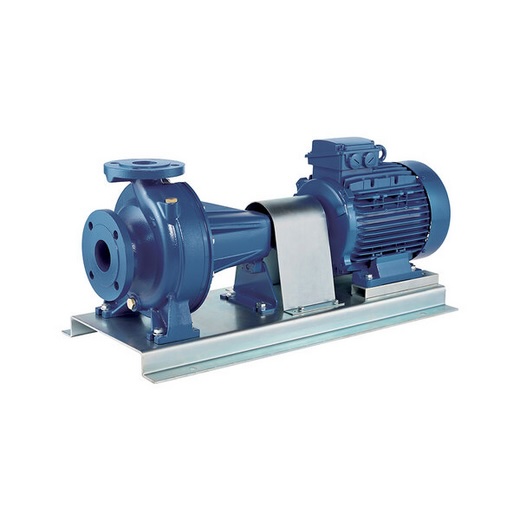
What Is Cavitation?
Cavitation is the formation and rapid collapse of vapor bubbles inside a pump due to low pressure at the suction side.
When water enters the impeller eye, the pressure naturally decreases. If this pressure falls below the liquid’s vapor pressure, tiny vapor bubbles form. As the liquid continues through the impeller, the pressure rises again, causing the bubbles to implode.
Each bubble collapse produces a microscopic shock wave that repeatedly strikes the impeller surface.
Over time, this leads to serious mechanical damage.
How Cavitation Occurs
The cavitation process can be explained in five simple steps:
Step 1
Water enters the suction pipe.
↓
Step 2
Pressure decreases at the impeller eye.
↓
Step 3
Pressure falls below vapor pressure.
↓
Step 4
Vapor bubbles form.
↓
Step 5
The bubbles collapse violently inside the impeller, causing damage.
Types of Cavitation
Suction Cavitation
Occurs when there is insufficient pressure at the pump inlet.
Common causes include:
- High suction lift
- Long suction piping
- Blocked suction strainers
- Undersized suction pipes
- Low water levels
Discharge Cavitation
Occurs when the pump is forced to operate far to the left of its performance curve due to excessive discharge pressure or restricted flow.
Internal Recirculation Cavitation
Occurs when the pump operates at very low flow rates, creating internal turbulence and localized low-pressure zones.
Common Causes of Cavitation
1. High Suction Lift
Installing the pump too far above the water source reduces available suction pressure.
2. Long Suction Pipe
Long pipelines create additional friction losses before the water reaches the pump.
3. Small Suction Pipe Diameter
Undersized suction pipes increase water velocity and pressure loss.
4. Blocked Suction Strainer
Debris restricts water flow and reduces inlet pressure.
5. Dirty Filters
Clogged filters increase suction resistance.
6. Air Leaks
Air entering the suction line reduces effective suction pressure.
7. High Water Temperature
Hot water has a higher vapor pressure, making cavitation more likely.
8. Incorrect Pump Selection
Operating a pump outside its Best Efficiency Point (BEP) increases the risk of cavitation.
9. Low Water Level
An insufficient water level at the suction source reduces Net Positive Suction Head Available (NPSHa).
10. Excessive Flow Demand
Running the pump beyond its design capacity lowers suction pressure.
Signs of Cavitation
Common warning signs include:
- Loud rattling or gravel-like noise
- Excessive vibration
- Fluctuating discharge pressure
- Reduced flow rate
- Lower pump efficiency
- Increased power consumption
- Mechanical seal failures
- Bearing damage
- Impeller erosion
- Frequent maintenance requirements
Effects of Cavitation
If ignored, cavitation can cause:
Impeller Damage
Repeated bubble collapse creates pits and holes in the impeller surface.
Reduced Pump Performance
Flow and pressure decrease significantly.
Increased Energy Consumption
The pump works harder while delivering less water.
Bearing Failure
Continuous vibration shortens bearing life.
Mechanical Seal Damage
Excessive vibration damages sealing surfaces.
Pump Casing Erosion
Severe cavitation can damage the internal casing.
Shortened Pump Life
Continuous cavitation dramatically reduces equipment lifespan.
Understanding NPSH
One of the most important concepts in preventing cavitation is Net Positive Suction Head (NPSH).
There are two values:
NPSH Available (NPSHa)
The actual pressure available at the pump suction based on the system design.
NPSH Required (NPSHr)
The minimum suction pressure required by the pump manufacturer for safe operation.
For reliable operation:
NPSHa should always be greater than NPSHr, with an additional safety margin recommended by the manufacturer.
How to Prevent Cavitation
Select the Correct Pump
Choose a pump that matches the required flow rate and Total Dynamic Head (TDH).
Reduce Suction Lift
Install the pump as close to the water source as possible.
Increase Suction Pipe Size
Larger suction pipes reduce friction losses and improve inlet pressure.
Shorten Suction Pipe Length
Minimize unnecessary bends and long pipe runs.
Eliminate Air Leaks
Inspect all suction pipe joints, flanges, valves, and fittings.
Clean Suction Strainers
Regular cleaning prevents unnecessary pressure losses.
Maintain Proper Water Levels
Ensure adequate liquid level at the suction source.
Operate Near the Best Efficiency Point (BEP)
Running the pump close to its BEP minimizes hydraulic disturbances.
Install Proper Valves
Avoid unnecessary restrictions on the suction side.
Perform Regular Maintenance
Routine inspections help detect issues before cavitation becomes severe.
Best Practices for End Suction Pumps
- Use correctly sized suction piping.
- Keep suction lines as short and straight as possible.
- Avoid sharp elbows close to the pump inlet.
- Prime the pump properly before startup.
- Never allow dry running.
- Monitor vibration and noise.
- Inspect impellers periodically.
- Replace worn components promptly.
- Follow manufacturer maintenance recommendations.
Troubleshooting Guide
| Problem | Possible Cause | Recommended Solution |
|---|---|---|
| Loud rattling noise | Cavitation | Improve suction conditions |
| Low flow | Blocked suction | Clean strainers and filters |
| Excessive vibration | Air leaks or cavitation | Repair leaks and increase NPSHa |
| Impeller erosion | Continuous cavitation | Replace impeller and correct system design |
| Seal leakage | Vibration | Replace seal and eliminate cavitation |
| High power consumption | Incorrect operating point | Operate closer to the BEP |
Why Choose Ebara End Suction Pumps?
Ebara end suction pumps are engineered for high hydraulic efficiency and reliable performance. Their precision-designed impellers, quality materials, and robust construction help deliver smooth operation across a wide range of water supply, HVAC, industrial, and irrigation applications.
Correct installation and operation according to Ebara recommendations will help minimize the risk of cavitation and maximize pump life.
Why Buy from DXB Solutions LLC?
DXB Solutions LLC supplies genuine Ebara End Suction Pumps across the UAE and provides complete technical support for pump selection, installation, troubleshooting, and maintenance.
Our services include:
- Genuine Ebara pumps
- Pump selection assistance
- Technical consultation
- Pump curve analysis
- Installation support
- Genuine spare parts
- Preventive maintenance
- Repair services
- Fast delivery across the UAE
Cavitation is a preventable issue that can significantly impact the performance and lifespan of an end suction pump. By understanding its causes, recognizing the early warning signs, maintaining adequate suction conditions, and selecting the correct pump for the application, you can avoid costly repairs and ensure reliable, energy-efficient operation.
Working with an experienced pump supplier such as DXB Solutions LLC helps ensure your pumping system is properly designed, installed, and maintained for long-term performance. For more info contact Ebara Pump Suppliers in UAE or call us at +971 4 2522966.