
Water pumps are widely used for residential, commercial and industrial applications across Dubai and the UAE. When selecting a water pump, one of the important technical considerations is whether to choose a single-phase or three-phase water pump.
Both types are designed to transfer water, but they differ in electrical supply requirements, motor characteristics, starting performance, available power ratings and suitable applications.
Understanding these differences helps homeowners, contractors, facility managers and industrial buyers select the correct pumping equipment for their installations.
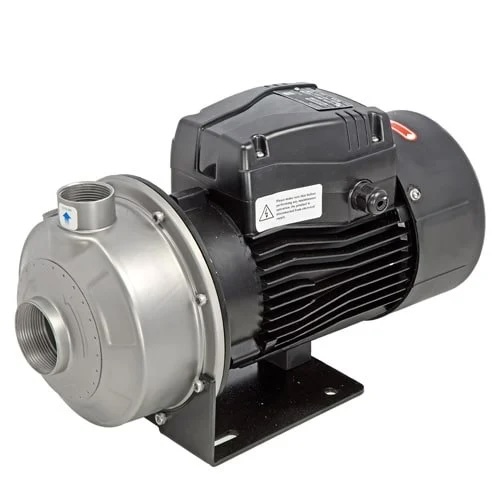
In this guide, DXB Solutions LLC, a water pump supplier in Dubai, explains the differences between single-phase and three-phase water pumps, their advantages, applications and important selection considerations.
1. What Is a Single-Phase Water Pump?
A single-phase water pump is a pump driven by an electric motor designed to operate from a single-phase AC electrical supply.
In Dubai and across the UAE, single-phase equipment commonly operates at approximately 230V, 50Hz, although the exact electrical supply must always be verified.
Single-phase pumps are commonly used for smaller water supply and transfer applications where three-phase power is unavailable or unnecessary.
Common Applications
- Residential villas and houses
- Domestic water pressure boosting
- Small water transfer systems
- Garden irrigation
- Small drainage installations
- Compact water supply systems
Advantages of Single-Phase Water Pumps
Simple Electrical Supply: Can operate from a suitable single-phase power connection.
Convenient Installation: Often suitable for smaller residential installations.
Wide Availability: Commonly available in domestic water pump ranges.
Compact Construction: Many models are designed for installations with limited space.
Lower Initial Cost: For comparable small-duty equipment, some single-phase models may have a lower initial cost, depending on the manufacturer and specifications.
Limitations
- Generally available in a more limited motor power range
- Higher current than comparable three-phase motors at the same voltage and output
- May require starting capacitors or other starting components
- Less suitable for many large industrial pumping applications
2. What Is a Three-Phase Water Pump?
A three-phase water pump is driven by an electric motor designed to operate using three-phase AC electrical power.
In the UAE, three-phase water pumps commonly operate at approximately 400V, 50Hz, depending on the installation and motor nameplate.
Three-phase pumps are widely used in commercial buildings, industrial facilities, HVAC systems and larger water distribution networks.
Common Applications
- Commercial building booster pump systems
- High-rise building water supply
- Hotels and hospitals
- Industrial water transfer
- Chilled water circulation
- Large irrigation systems
- Water treatment plants
- Industrial process pumping
Advantages of Three-Phase Water Pumps
Suitable for Higher Motor Ratings: Three-phase motors are widely available for medium- and high-power applications.
Smooth Motor Operation: Three-phase motors develop a rotating magnetic field that supports smooth torque production.
Efficient Performance: Three-phase motors can offer high efficiency, particularly in larger power ratings.
Industrial Reliability: Commonly used for continuous-duty industrial equipment.
VFD Compatibility: Many three-phase motors can be operated using properly selected variable frequency drives.
Limitations
- Requires a compatible electrical supply or suitable drive arrangement
- Electrical installation may be more complex
- Phase-loss and phase-imbalance protection may be required
- Installation and maintenance should be performed by qualified personnel
3. Main Differences Between Single-Phase and Three-Phase Water Pumps
The following table compares the important characteristics of both pump types.
| Parameter | Single-Phase Pump | Three-Phase Pump |
|---|---|---|
| Electrical supply | Single-phase AC | Three-phase AC |
| Typical UAE voltage | 230V | 400V |
| Frequency | 50Hz | 50Hz |
| Common applications | Domestic and light commercial | Commercial and industrial |
| Motor power range | Commonly smaller ratings | Small to very large ratings |
| Starting arrangement | Often uses capacitor-based starting | Commonly self-starting induction motor |
| Motor torque | May have greater torque pulsation | Generally smoother torque |
| Efficiency | Depends on motor design | Often advantageous at larger ratings |
| VFD operation | Requires compatible motor and drive | Widely supported |
| Installation | Usually simpler for small systems | Requires suitable three-phase supply |
The voltage values shown are typical nominal values, not universal specifications. Always confirm the motor nameplate and local electrical installation requirements.
4. Difference in Motor Performance
Motor performance is one of the main differences between single-phase and three-phase water pumps.
Single-Phase Motor Performance
Single-phase motors require an appropriate starting mechanism because a basic single-phase induction motor does not produce a self-starting rotating magnetic field.
Many domestic pumps use capacitor-start or capacitor-run motor arrangements.
These motors are suitable for numerous small pumping applications.
Three-Phase Motor Performance
Three-phase motors naturally produce a rotating magnetic field when supplied with balanced three-phase electricity.
This generally provides smoother torque and makes three-phase induction motors particularly suitable for commercial and industrial pumping applications.
However, the hydraulic performance of a water pump depends primarily on its impeller design, rotational speed and pump curve, not simply on whether the motor is single-phase or three-phase.
5. Which Water Pump Is More Energy Efficient?
Energy efficiency is important when selecting water pumps for continuous operation.
Three-phase motors can provide efficiency advantages, particularly at larger motor ratings. However, a three-phase motor is not automatically more efficient than every single-phase motor.
Actual electricity consumption depends on:
- Motor efficiency
- Pump hydraulic efficiency
- Flow rate and total dynamic head
- Operating hours
- Pump selection and sizing
- Control method
- Operating speed
A correctly sized pump operating near its best efficiency point may consume less electricity than an oversized pump, regardless of the electrical phase arrangement.
For applications with variable water demand, a suitable VFD-controlled system can reduce energy consumption compared with less efficient control arrangements.
6. Difference in Starting Current
Starting current is another important consideration.
Single-Phase Pumps
Single-phase induction motors may draw several times their rated running current during startup.
Starting capacitors, relays or other components may be used depending on the motor design.
Three-Phase Pumps
Three-phase induction motors can also draw high starting current when connected directly to the electrical supply.
Depending on the application, starting methods may include:
- Direct-on-line (DOL) starters
- Star-delta starters, where suitable
- Soft starters
- Variable frequency drives (VFDs)
The correct starting method depends on motor rating, electrical supply limitations and pump operating requirements.
7. Single-Phase vs Three-Phase Water Pumps for Villas
Residential villas in Dubai commonly use water pumps for transferring water from storage tanks and maintaining pressure in domestic plumbing systems.
For smaller installations, single-phase pumps may be suitable.
Typical applications include domestic booster pumps, compact multistage pumps and small water transfer pumps.
However, larger villas with higher simultaneous water demand may benefit from a three-phase pumping system if a suitable electrical supply is available.
Pump selection should be based on the required flow rate, total dynamic head, operating conditions and electrical supply.
8. Single-Phase vs Three-Phase Pumps for Commercial Buildings
Commercial buildings generally require higher pumping capacities and more demanding operating schedules.
Three-phase pumps are commonly preferred for:
- High-rise water booster systems
- Hotel water supply
- Hospital pumping systems
- HVAC chilled water circulation
- Commercial water transfer
- Industrial facilities
Three-phase motors are particularly suitable for larger pumps and multi-pump booster arrangements.
For critical installations, duty-and-standby configurations may be considered to improve operational reliability.
9. Can a Single-Phase Pump Be Replaced With a Three-Phase Pump?
A single-phase pump can sometimes be replaced with a three-phase model, but the electrical installation must support the replacement.
Before making the change, verify:
Electrical Supply: Confirm that a suitable three-phase connection is available.
Motor Rating: Ensure the replacement motor meets the required mechanical power and operating conditions.
Pump Performance: Confirm that the replacement pump delivers the required flow and head.
Control Panel: Check that starters, overload protection and controls are compatible with the new motor.
Installation Dimensions: Verify suction and discharge connections, mounting dimensions and available space.
Changing the electrical phase alone does not guarantee improved water pressure or flow.
10. Can a Three-Phase Pump Operate on Single-Phase Electricity?
A standard three-phase motor should not be connected directly to a single-phase supply.
However, some three-phase motors can operate from a suitable single-phase-input VFD that provides a compatible three-phase output.
This requires careful verification of:
- VFD input and output ratings
- Motor voltage and winding configuration
- Motor current and power
- Drive derating requirements
- Starting and operating conditions
The arrangement must be approved for the selected motor and drive. It should be designed and installed by a qualified electrical professional.
11. How to Choose Between Single-Phase and Three-Phase Water Pumps
Selecting the correct pump requires evaluating both hydraulic and electrical requirements.
Step 1: Determine the Required Flow Rate
Calculate the water demand in m³/h or L/s.
Step 2: Calculate Total Dynamic Head
Determine the required pump head based on elevation, pressure and piping losses.
Step 3: Confirm the Electrical Supply
Check whether the installation has single-phase or three-phase power.
Step 4: Select the Pump Type
Choose a suitable end suction, multistage, booster, submersible or circulation pump based on the application.
Step 5: Review Motor Power and Efficiency
Compare motor ratings, electrical current, efficiency and operating duty.
Step 6: Check the Pump Performance Curve
Verify that the pump delivers the required flow and head within its recommended operating range.
Step 7: Consider Future Requirements
Evaluate expected operating hours, future demand, maintenance requirements and possible system expansion.
12. Water Pump Suppliers in Dubai – DXB Solutions LLC
DXB Solutions LLC supplies single-phase and three-phase water pumps for residential, commercial and industrial applications across Dubai and the UAE.
Our pump range includes:
- End suction centrifugal pumps
- Vertical multistage pumps
- Horizontal multistage pumps
- Water booster pump systems
- Submersible drainage pumps
- Submersible sewage pumps
- Borewell pumps
- HVAC circulation pumps
- Industrial water pumps
We work with established manufacturers, including Ebara, Grundfos, Lowara, Goulds, Pedrollo, Tsurumi and Wilo.
Our team can assist customers with selecting suitable pumping equipment based on flow, head, motor rating, electrical supply and application requirements.
Understanding the difference between single-phase and three-phase water pumps is essential when selecting pumping equipment for residential, commercial and industrial applications.
Single-phase pumps are commonly suitable for smaller domestic installations, while three-phase pumps are widely used in larger buildings, HVAC systems and industrial facilities.
The correct choice depends on the required flow rate, total dynamic head, electrical supply, motor power, efficiency and operating conditions.
For single-phase and three-phase water pumps in Dubai and across the UAE, DXB Solutions LLC offers a wide range of pumping equipment. For more info contact Water Pump Suppliers in Dubai or call us at +971 4 2522966.