
Selecting the right water pump requires a clear understanding of three important technical parameters: flow rate, head and pressure. These factors determine how much water a pump can deliver, the energy required to move the water and the pressure available within the pumping system.
Whether selecting a pump for a villa, high-rise building, hotel, commercial facility, irrigation network or industrial application, understanding these parameters is essential for reliable and efficient operation.
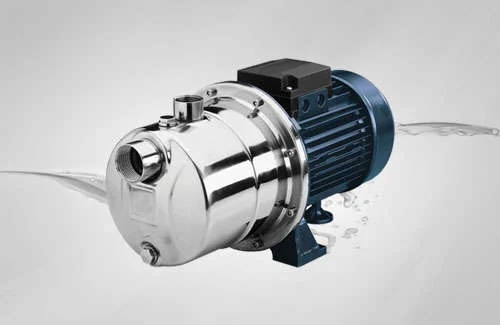
In this guide, DXB Solutions LLC, a water pump supplier in Dubai, explains water pump flow rate, head and pressure, their differences, calculation methods and practical examples to help engineers, contractors and buyers select suitable pumping equipment.
1. What Is Water Pump Flow Rate?
Water pump flow rate is the volume of water a pump delivers over a specific period.
It is usually represented by the symbol Q.
Flow rate determines the quantity of water available for the connected system.
Common Flow Rate Units
- Litres per second (L/s)
- Litres per minute (LPM)
- Cubic metres per hour (m³/h)
- Gallons per minute (GPM)
Flow Rate Conversion
1 m³/h = 1,000 litres per hour
1 m³/h = approximately 16.67 LPM
1 L/s = 3.6 m³/h
For example, a water pump delivering 10 m³/h supplies approximately 10,000 litres of water per hour at its specified operating point.
How to Calculate Water Pump Flow Rate
The basic formula is:
Q = V / t
Where:
- Q = Flow rate
- V = Volume of water
- t = Time
Example:
A pump is required to fill a 20,000-litre water tank within 2 hours.
Required flow rate:
20,000 ÷ 2 = 10,000 litres/hour
Converting into m³/h:
10,000 ÷ 1,000 = 10 m³/h
Therefore, the pump must deliver an average flow of 10 m³/h under the actual system operating conditions.
For domestic water booster systems, peak simultaneous water demand should be considered rather than relying only on daily water consumption.
2. What Is Water Pump Head?
Pump head represents the hydraulic energy transferred to the liquid per unit weight.
It is generally expressed in metres (m).
Pump head indicates the pump’s ability to overcome elevation differences, pressure requirements and piping resistance.
Different Types of Pump Head
Static Head
Static head is the difference in elevation between the liquid levels or relevant reference points of a pumping system.
Friction Head
Friction head represents energy losses caused by water flowing through pipes, valves, elbows, fittings and other components.
Pressure Head
Pressure head represents the equivalent height of a liquid column corresponding to a given pressure.
Total Dynamic Head (TDH)
Total dynamic head is the total differential head the pump must develop at the required flow rate.
For a simplified system pumping between two reservoirs or pressure reference points:
TDH = Static Head + Friction Head + Required Pressure Difference Head
The actual calculation must account for inlet and outlet pressures, elevation differences and velocity effects where relevant.
Example of Total Dynamic Head Calculation
Consider a water pump supplying water from an atmospheric storage tank to an elevated pressurized outlet.
| Parameter | Head |
|---|---|
| Static elevation difference | 25 m |
| Pipe friction losses | 8 m |
| Required outlet pressure head | 20 m |
| Total Dynamic Head | 53 m |
The pump must be selected to deliver the required flow at approximately 53 metres of head.
The actual duty point should be verified using the pump performance curve.
3. What Is Water Pump Pressure?
Water pump pressure refers to the force exerted by the water per unit area within the system.
Pressure is commonly measured in:
- Bar
- Kilopascal (kPa)
- Pounds per square inch (PSI)
Water Pressure Conversion
For clean water under typical conditions:
1 bar ≈ 10.2 metres of water head
1 bar ≈ 14.5 PSI
1 PSI ≈ 0.069 bar
Example
If a pump develops a differential head of 40 metres:
40 ÷ 10.2 = approximately 3.92 bar
This represents the approximate pressure increase equivalent to 40 metres of water head under typical conditions.
The actual pressure at a particular point in the piping system also depends on elevation, friction losses, inlet pressure and operating conditions.
4. Difference Between Flow Rate, Head and Pressure
Although these terms are related, they represent different hydraulic characteristics.
| Parameter | Meaning | Common Unit |
|---|---|---|
| Flow Rate | Quantity of water delivered per unit time | m³/h |
| Head | Hydraulic energy per unit weight | Metres |
| Pressure | Force exerted per unit area | Bar |
| Total Dynamic Head | Head required to overcome system resistance | Metres |
Simple explanation:
- Flow rate determines how much water is delivered.
- Head represents the energy the pump adds to the water.
- Pressure indicates the force per unit area within the piping system.
A pump must provide the required flow and head simultaneously to meet the application’s operating requirements.
5. Relationship Between Water Pump Flow Rate and Head
In a typical centrifugal pump operating at a fixed speed, the available pump head generally decreases as flow rate increases.
For example, consider an illustrative pump performance curve:
| Flow Rate | Pump Head |
|---|---|
| 0 m³/h | 60 m |
| 5 m³/h | 56 m |
| 10 m³/h | 50 m |
| 15 m³/h | 42 m |
| 20 m³/h | 30 m |
These figures are for illustration only and do not represent a particular pump model.
The pump’s actual operating point is determined by the intersection of its performance curve and the system resistance curve.
This is why selecting a pump based only on maximum flow rate or maximum head can result in incorrect equipment selection.
6. How to Calculate Water Pump Pressure Requirements
The pressure required for a pumping system depends on the application, building height, pipe friction losses and minimum required pressure at the delivery point.
Example: Water Pump for a Commercial Building
Consider a simplified building water supply arrangement with the following requirements:
- Required flow rate: 15 m³/h
- Static elevation difference: 30 metres
- Pipe friction losses: 10 metres
- Required outlet pressure head: 20 metres
Total dynamic head:
30 + 10 + 20 = 60 metres
Equivalent pump differential pressure for water:
60 ÷ 10.2 = approximately 5.88 bar
The pump should therefore be evaluated for a duty point of:
15 m³/h at 60 metres head
This example assumes an atmospheric source and does not include additional suction pressure, velocity corrections or design margins. A complete engineering calculation is required for actual equipment selection.
7. How Building Height Affects Water Pump Head
Building height is an important factor when selecting water pumps for villas, apartments, hotels and commercial towers.
For water, every 10 metres of elevation corresponds to approximately 0.98 bar of hydrostatic pressure difference.
For example, raising water by 40 metres requires approximately 3.92 bar of pressure difference to overcome elevation alone.
Additional head may be required for:
- Pipe friction losses
- Valves and fittings
- Minimum fixture pressure
- Water treatment equipment
- Other system resistance
High-rise buildings may require pressure zoning to prevent excessive pressure at lower floors.
8. Understanding Water Pump Performance Curves
A pump performance curve is an important technical document used to select the correct pump.
It shows how a pump performs at different flow rates and operating conditions.
Common information includes:
Flow versus Head Curve: Shows available pump head at different flow rates.
Efficiency Curve: Indicates the efficiency of the pump at different operating points.
Power Curve: Shows the shaft power absorbed by the pump.
NPSH Required Curve: Indicates the minimum net positive suction head required by the pump according to the manufacturer’s test criteria.
For reliable operation, the selected duty point should normally fall within the manufacturer’s recommended operating range, preferably near the best efficiency point.
9. How to Select the Right Water Pump Based on Flow and Head
The correct selection process involves several steps.
Step 1: Determine the Required Flow Rate
Calculate the water demand based on the application.
For booster systems, consider simultaneous fixture demand and peak usage.
For tank transfer applications, consider the required tank volume and filling time.
Step 2: Calculate Total Dynamic Head
Determine the required head based on elevation, pressure differences and friction losses.
Step 3: Identify the Pump Type
Choose the appropriate pump design based on the application.
Common options include:
- End suction centrifugal pumps
- Vertical multistage pumps
- Horizontal multistage pumps
- Inline circulation pumps
- Submersible pumps
- Booster pump systems
Step 4: Review Manufacturer Performance Curves
Select a pump that delivers the required flow and head at the intended operating speed.
Step 5: Check Motor Power and Efficiency
Verify that the motor rating is suitable for the pump’s absorbed power throughout the intended operating range.
Step 6: Evaluate Installation Conditions
Consider suction conditions, available NPSH, water temperature, pipe sizes, electrical requirements and maintenance access.
10. Common Mistakes When Selecting Water Pumps
Incorrect pump selection can cause poor performance, excessive electricity consumption and premature equipment failure.
Common mistakes include:
Selecting Based Only on Motor Horsepower
Motor horsepower does not independently determine flow or head.
Ignoring Pipe Friction Losses
Long pipelines, undersized pipes and numerous fittings can significantly increase the required head.
Confusing Pressure and Flow Rate
A high-pressure pump does not necessarily provide a high flow rate.
Oversizing the Pump
An oversized pump may operate inefficiently or outside its recommended range.
Ignoring Suction Conditions
Insufficient available NPSH can lead to cavitation and damage.
Not Reviewing the Pump Curve
A pump’s maximum head and maximum flow are generally achieved at different operating points.
11. Water Pump Suppliers in Dubai – DXB Solutions LLC
DXB Solutions LLC supplies water pumps and pumping equipment for residential, commercial and industrial applications across Dubai and the UAE.
Our product range includes:
- End suction centrifugal pumps
- Vertical multistage pumps
- Horizontal multistage pumps
- Water booster pump systems
- Submersible drainage pumps
- Submersible sewage pumps
- HVAC circulation pumps
- Industrial water pumps
We work with established pump manufacturers, including Ebara, Grundfos, Lowara, Goulds, Pedrollo, Tsurumi and Wilo.
Our team can assist customers with pump enquiries, reviewing flow and head requirements, and identifying suitable pumping equipment for different applications.
Understanding water pump flow rate, head and pressure is essential for selecting suitable pumping equipment.
Flow rate determines the quantity of water delivered, head represents the hydraulic energy required to move the water, and pressure indicates the force per unit area within the system.
Correctly calculating these parameters helps ensure reliable water supply, efficient operation and reduced maintenance requirements.
For water pump selection and supply in Dubai and across the UAE, DXB Solutions LLC offers a range of pumping solutions for residential, commercial and industrial applications. For more info contact Water Pump Suppliers in Dubai or call us at +971 4 2522966.