
Centrifugal water pumps are among the most widely used pumping equipment in residential, commercial and industrial applications. They are commonly used for water supply, pressure boosting, chilled water circulation, irrigation, water treatment and industrial liquid transfer.
Understanding how a centrifugal water pump works helps engineers, contractors, maintenance professionals and buyers select suitable pumping equipment for different applications.
In this guide, DXB Solutions LLC, a water pump supplier in Dubai, explains the working principle of centrifugal pumps, their main components, operating process, applications, advantages and important selection considerations.
What Is a Centrifugal Water Pump?
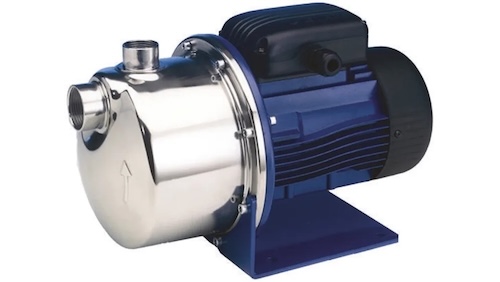
A centrifugal water pump is a mechanical device that transfers energy from a rotating impeller to water, increasing the liquid’s velocity and pressure so it can flow through a piping system.
The pump is generally driven by an electric motor connected to a rotating shaft and impeller.
As the impeller rotates, water enters near the centre of the impeller, known as the eye, and moves outward through the impeller passages. The pump casing then helps convert part of the water’s velocity energy into pressure energy.
Centrifugal pumps are available in different designs, including end suction pumps, inline pumps, vertical multistage pumps, horizontal multistage pumps and submersible centrifugal pumps.
Main Components of a Centrifugal Water Pump
A centrifugal water pump consists of several important components that work together to transfer water efficiently.
1. Impeller
The impeller is the rotating hydraulic component responsible for transferring energy to the water.
As it rotates, water moves from the impeller eye toward its outer diameter, gaining energy.
Impellers may be closed, semi-open or open, depending on the pump design and liquid-handling requirements.
2. Pump Casing
The pump casing surrounds the impeller and directs the liquid toward the discharge connection.
Volute casings are commonly used in centrifugal pumps. Their geometry helps convert part of the liquid’s velocity into static pressure.
3. Pump Shaft
The shaft connects the impeller to the driving motor and transmits rotational power.
It must withstand the mechanical forces generated during pump operation.
4. Mechanical Seal
The mechanical seal helps prevent pumped liquid from leaking along the rotating shaft where it passes through the pump casing.
Seal materials and designs depend on the liquid, temperature, pressure and operating conditions.
5. Bearings
Bearings support the rotating shaft and help maintain correct alignment during operation.
Proper bearing lubrication and maintenance are important for pump reliability.
6. Electric Motor
The electric motor supplies the mechanical power required to rotate the impeller.
Motor selection depends on pump power requirements, electrical supply, operating conditions and efficiency.
7. Suction and Discharge Connections
The suction connection allows water to enter the pump, while the discharge connection directs the pressurized water into the piping system.
Correct pipe sizing and installation help reduce friction losses and operating problems.
How Does a Centrifugal Water Pump Work? Step-by-Step
The working principle of a centrifugal water pump can be explained in six stages.
Step 1: Water Enters Through the Suction Inlet
Water enters the pump through the suction pipe and flows toward the centre of the impeller.
For a conventional non-self-priming centrifugal pump, the casing and suction arrangement must be properly primed before starting.
Step 2: The Electric Motor Rotates the Impeller
When the motor starts, it rotates the pump shaft and impeller.
The rotating impeller transfers mechanical energy to the water.
Step 3: Water Moves Outward Through the Impeller
As the impeller rotates, water moves from the impeller eye toward the outer edges of the impeller passages.
The liquid gains velocity and energy as it passes through the rotating impeller.
Step 4: Velocity Energy Is Converted Into Pressure
Water leaving the impeller enters the volute casing or diffuser.
The casing or diffuser helps convert part of the liquid’s velocity energy into pressure energy.
Step 5: Water Flows Through the Discharge Outlet
The pressurized water exits through the discharge connection and enters the piping system.
The actual flow rate depends on the pump performance curve and the resistance of the connected system.
Step 6: Continuous Water Flow Is Maintained
As long as the pump operates under suitable conditions and has an adequate liquid supply, water continues entering the suction inlet and leaving through the discharge outlet.
This process produces continuous flow through the pumping system.
Understanding Flow Rate and Pump Head
Two important parameters determine centrifugal pump performance: flow rate and head.
Flow Rate (Q)
Flow rate represents the volume of water delivered over a specific period.
Common units include:
- Cubic metres per hour (m³/h)
- Litres per second (L/s)
- Litres per minute (LPM)
Pump Head (H)
Pump head represents the energy transferred to the liquid per unit weight, commonly expressed in metres.
It indicates the pump’s ability to overcome elevation differences, pressure requirements and piping resistance.
For example, a centrifugal pump rated at 20 m³/h and 40 metres head is designed to deliver approximately 20 cubic metres of water per hour at a differential head of 40 metres at the specified operating speed.
The pump must be selected based on its actual performance curve rather than flow or head ratings considered separately.
Different Types of Centrifugal Water Pumps
Centrifugal pumps are available in several configurations.
End Suction Centrifugal Pumps
End suction pumps generally have an axial suction connection and a radial discharge connection.
They are commonly used for chilled water circulation, industrial water transfer, irrigation and commercial building services.
Vertical Multistage Centrifugal Pumps
Vertical multistage pumps contain multiple impellers arranged in stages along a vertical shaft.
They are commonly used in booster pump systems, water treatment and high-pressure water supply applications.
Horizontal Multistage Centrifugal Pumps
Horizontal multistage pumps use multiple impellers arranged along a horizontal shaft.
They are suitable for pressure boosting, water supply and selected industrial applications.
Inline Centrifugal Pumps
Inline centrifugal pumps have suction and discharge connections aligned along the same pipeline axis.
They are widely used in HVAC systems, chilled water circulation and hot water circulation applications.
Submersible Centrifugal Pumps
Submersible centrifugal pumps are designed to operate while submerged in liquid.
They are commonly used for drainage, sewage, dewatering and groundwater extraction.
Advantages of Centrifugal Water Pumps
Centrifugal pumps offer several advantages for residential, commercial and industrial applications.
Simple Construction: Many centrifugal pump designs have relatively few moving hydraulic components.
Continuous Flow: They provide smooth, continuous liquid delivery during normal operation.
Wide Capacity Range: Centrifugal pumps are available for low, medium and high flow applications.
Energy Efficiency: Correctly selected pumps can operate efficiently near their best efficiency point.
Different Installation Options: Available configurations include horizontal, vertical, inline and submersible designs.
Easy Integration: Centrifugal pumps can be integrated with control panels, pressure sensors, VFDs and automated pumping systems.
Common Applications of Centrifugal Water Pumps in Dubai
Centrifugal pumps are widely used throughout Dubai and the UAE.
Residential Buildings
Used for domestic water supply, water transfer and pressure boosting.
Commercial Buildings
Installed in hotels, hospitals, shopping malls, office towers and apartment buildings.
HVAC and Chilled Water Systems
Used to circulate chilled water through cooling systems, heat exchangers and air handling equipment.
Industrial Applications
Used for process water transfer, cooling water circulation, washing systems and other suitable liquid-handling applications.
Irrigation and Landscaping
Used to supply water to irrigation networks, landscaping systems and agricultural installations.
Water Treatment Plants
Used for raw water transfer, filtration systems, treated water distribution and other treatment processes.
Common Centrifugal Water Pump Problems
Understanding common operating problems helps prevent unnecessary downtime.
1. Pump Is Running but Not Delivering Water
Possible causes include:
- Pump casing not properly primed
- Air entering the suction pipe
- Blocked suction strainer
- Incorrect motor rotation
- Insufficient available suction pressure
2. Low Water Pressure
Possible causes include:
- Incorrect pump selection
- Excessive pipe friction losses
- Worn or damaged impeller
- Incorrect motor speed
- Restricted suction or discharge piping
3. Excessive Noise and Vibration
Possible causes include:
- Cavitation
- Misalignment
- Bearing damage
- Impeller imbalance
- Improper piping support
4. Mechanical Seal Leakage
Possible causes include:
- Dry running
- Incorrect installation
- Excessive vibration
- Damaged seal faces
- Unsuitable seal materials
5. Motor Overheating
Possible causes include:
- Motor overload
- Incorrect electrical supply
- Poor ventilation
- Mechanical binding
- Operation outside the recommended pump range
How to Select the Right Centrifugal Water Pump
Selecting the correct centrifugal pump requires careful evaluation of the system requirements.
Determine the Required Flow Rate
Calculate the required water quantity based on the application and expected operating demand.
Calculate the Total Dynamic Head
Determine the head required to overcome static elevation, pressure differences and friction losses.
Review the Pump Performance Curve
Select a pump that can deliver the required flow and head within its recommended operating range.
Check Motor Power and Efficiency
Confirm that the motor can handle the absorbed power throughout the intended operating range.
Evaluate Liquid Properties
Consider liquid temperature, density, viscosity, solids content and chemical compatibility.
Consider Installation Conditions
Check suction conditions, available NPSH, pipework arrangement, ambient temperature and maintenance access.
Verify Spare Parts and Maintenance Support
Availability of mechanical seals, bearings, impellers and other components can influence long-term operating costs.
Centrifugal Water Pump Suppliers in Dubai – DXB Solutions LLC
DXB Solutions LLC supplies centrifugal water pumps and pumping equipment for residential, commercial and industrial applications across Dubai and the UAE.
Our centrifugal pump range includes:
- End suction centrifugal pumps
- Vertical multistage pumps
- Horizontal multistage pumps
- Inline circulation pumps
- Water booster pump systems
- Submersible drainage pumps
- Submersible sewage pumps
- Industrial centrifugal pumps
We work with established pump manufacturers, including Ebara, Grundfos, Lowara, Goulds, Pedrollo, Tsurumi and Wilo.
Our team can assist customers with technical enquiries, pump selection and identifying suitable equipment based on flow, head and application requirements.
Understanding how a centrifugal water pump works is essential for selecting, operating and maintaining pumping equipment effectively.
The working principle involves transferring mechanical energy from a rotating impeller to the liquid, allowing water to flow through a system at the required pressure and capacity.
Correct pump selection, installation and maintenance help improve efficiency, reliability and service life.
For centrifugal water pumps in Dubai and across the UAE, DXB Solutions LLC offers a range of pumping solutions for residential, commercial and industrial applications. For more info contact Water Pump Suppliers in Dubai or call us at +971 4 2522966.