
Pressure vessels are widely used with water pumps and booster pump systems to maintain stable pressure, provide usable water drawdown and reduce unnecessary pump starting and stopping.
When a pressure vessel develops a problem, common symptoms include frequent pump cycling, pressure fluctuations, low water drawdown, loss of air pressure, water at the air valve, unusual noises or visible leakage.
Some problems can be corrected by adjusting the vessel pre-charge or system pressure settings. Others may indicate a damaged bladder, leaking valve, corrosion or a vessel that requires replacement.
This guide explains the most common pressure vessel problems, their possible causes and appropriate corrective actions.
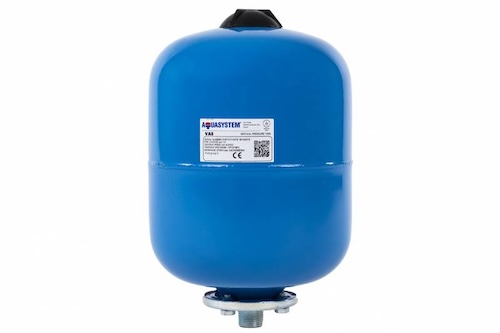
1. Booster Pump Starts and Stops Frequently
Frequent pump starting and stopping, often called short cycling, is one of the most common signs of a pressure vessel or pumping-system problem.
Possible Causes
- Pressure vessel is too small
- Pre-charge pressure is too low
- Pre-charge pressure is too high
- Bladder or diaphragm is damaged
- Vessel has become waterlogged
- Incorrect pressure-switch settings
- Water leakage in the system
- Faulty pressure switch or sensor
- Pump or control-system problem
How to Fix It
First check whether there are any leaks or abnormal water demands.
Then switch off and safely isolate the pump and check the pressure vessel’s pre-charge with the water side completely depressurized.
Compare the measured pre-charge with the vessel and pump-system manufacturer’s recommended setting.
If pre-charge is correct but the pump continues to short cycle, inspect the bladder, pressure switch, vessel size and other system components.
2. Pressure Vessel Is Losing Air Pressure
A pressure vessel requires the correct air pre-charge to operate properly.
If it repeatedly loses air, the vessel may provide less drawdown and the pump may start more frequently.
Possible Causes
- Leaking air valve
- Loose valve core
- Damaged bladder or diaphragm
- Leakage through vessel components
- Incorrect maintenance procedure
How to Fix It
Check the air valve for leakage.
The valve core may need tightening or replacement if it is defective.
If air pressure continues to fall after being correctly recharged, the bladder or diaphragm should be inspected.
Repeatedly adding air without identifying the cause is not a permanent solution.
3. Water Comes Out of the Air Valve
If water comes from the air charging valve of a typical bladder pressure vessel, it can be an indication that the bladder has failed and water has entered the air side.
Possible Cause
The bladder or diaphragm may be damaged or ruptured.
How to Fix It
The vessel should be inspected.
If the model has a replaceable bladder, the bladder may be replaced according to the manufacturer’s procedure.
If the internal membrane is not serviceable, complete vessel replacement may be necessary.
Do not simply add more air and continue operating the system without investigating the problem.
4. Pressure Vessel Has Become Waterlogged
A waterlogged pressure vessel has lost much or all of its effective compressed-air cushion.
Without sufficient air, the vessel cannot provide normal drawdown.
Common Symptoms
- Pump starts frequently
- Pressure rises very quickly
- Pressure falls rapidly
- Very little water is delivered before the pump starts
- Vessel feels unusually full of water
- Pump operates in short cycles
Possible Causes
- Loss of pre-charge
- Damaged bladder
- Failed diaphragm
- Air leakage
How to Fix It
Check the pre-charge correctly with the water side depressurized.
If the vessel cannot maintain pre-charge or water is present at the air valve, inspect the bladder or diaphragm.
A damaged internal membrane may require replacement.
5. Pressure Vessel Provides Very Little Water
A customer may have a 100L or 200L pressure vessel but notice that only a relatively small quantity of water is delivered before the pump starts.
This does not automatically mean there is a fault.
Remember:
Nominal Vessel Capacity ≠ Usable Water Drawdown
A pressure vessel contains both water and compressed air.
Actual drawdown depends on:
- Vessel capacity
- Pre-charge
- Pump cut-in pressure
- Pump cut-out pressure
How to Fix It
First determine whether the available drawdown is actually below the manufacturer’s specification.
If it is too low, check:
- Pre-charge
- Cut-in pressure
- Cut-out pressure
- Bladder condition
- Vessel sizing
The vessel may simply be undersized for the required pump duty.
6. Pressure Drops Too Quickly
If system pressure falls rapidly after the pump stops, several problems are possible.
Possible Causes
- Pressure vessel is undersized
- Incorrect pre-charge
- Bladder failure
- Leakage in the piping system
- Leaking check valve
- Water demand elsewhere in the building
- Pump-system control problem
How to Fix It
First determine whether water is actually being consumed.
Then inspect the system for leaks and check valves.
Check the vessel’s pre-charge and usable drawdown.
If the vessel is functioning correctly but is too small for the application, a larger or additional pressure vessel may be required.
7. Pressure Vessel Does Not Hold Pressure
If system pressure falls even when there is no water demand, the pressure vessel itself may not necessarily be the cause.
Possible Causes
- Piping leakage
- Leaking non-return/check valve
- Pump leakage
- Pressure relief valve leakage
- Bladder or vessel problem
- Leakage from fixtures
How to Fix It
Isolate sections of the system where practical and identify where pressure is being lost.
Check:
Pressure vessel → Check valve → Pump → Piping → Fixtures → Relief valves
Do not replace the pressure vessel until other possible leakage points have been investigated.
8. Pre-Charge Pressure Is Too Low
Low pre-charge reduces the vessel’s ability to operate correctly over its intended pressure range.
Possible Symptoms
- Frequent pump cycling
- Poor drawdown
- Rapid pressure changes
- Vessel becoming increasingly waterlogged
How to Fix It
Switch off the pump and depressurize the water side completely.
The water pressure gauge should read approximately:
0 bar
Measure the vessel air pressure and adjust it according to the manufacturer’s specification.
For many conventional pressure-switch systems, pre-charge is set somewhat below pump cut-in pressure.
For example:
Cut-in = 3.0 bar
An example pre-charge might be approximately:
2.8 bar
This is only an example and should not be treated as a universal setting.
9. Pre-Charge Pressure Is Too High
More air pressure is not necessarily better.
If pre-charge is too high, the vessel may contain very little usable water as the system approaches pump start pressure.
Possible Symptoms
- Low drawdown
- Pump starts quickly after opening a tap
- Sudden pressure changes
- Poor pressure-vessel performance
How to Fix It
Depressurize the water side and measure the actual pre-charge.
Reduce the air pressure to the manufacturer’s specified setting if necessary.
Never adjust pre-charge solely by observing the normal system pressure while the vessel contains pressurized water.
10. Pressure Vessel Bladder Is Damaged
The bladder is one of the most important components of many pressure vessels.
Over time, it may deteriorate or fail.
Possible Symptoms
- Water at the air valve
- Vessel repeatedly loses pre-charge
- Pump short cycling
- Very low drawdown
- Rapid pressure changes
- Vessel appears waterlogged
How to Fix It
Determine whether the vessel has a replaceable bladder.
If it does, install the correct replacement according to manufacturer instructions.
Inspect the vessel internally where appropriate for corrosion or damage before installing a new bladder.
If the vessel itself is damaged or the membrane is non-replaceable, replace the complete vessel.
11. Pressure Vessel Is Leaking Water
Visible water leakage should never be ignored.
Common Leakage Areas
- Flange
- Threaded connection
- Welded areas
- Vessel body
- Drain connection
- Bladder flange assembly
How to Fix It
First safely depressurize and isolate the vessel.
A leaking threaded fitting or serviceable flange may be repairable.
However, if the vessel body itself is corroded, cracked or leaking, the vessel should generally be removed from service and replaced according to manufacturer and site safety requirements.
Do not weld, drill or attempt an unauthorized repair on a pressurized vessel.
12. Pressure Vessel Is Rusting or Corroding
Corrosion can occur because of:
- Water leakage
- Humid pump-room conditions
- Damaged protective coating
- Outdoor installation
- Chemical exposure
- Condensation
How to Fix It
Minor external surface corrosion should be assessed and treated according to the manufacturer’s recommendations.
Deep corrosion, pitting, structural deterioration or leakage requires professional assessment.
A pressure vessel operates under pressure, so structural integrity is critical.
13. Pressure Vessel Makes Unusual Noise
Some changes in sound can occur as water enters and leaves a vessel, but abnormal knocking, vibration or pipe movement should be investigated.
Possible Causes
- Loose vessel mounting
- Pipe vibration
- Water hammer
- Rapid pump cycling
- Incorrect pressure settings
- Failed bladder
- Poor pipe support
How to Fix It
Check the vessel mounting, pipe supports, pump operation and pressure settings.
If water hammer is present, the entire hydraulic system may need to be evaluated rather than treating the pressure vessel as the only possible cause.
14. Pump Runs but Pressure Does Not Increase Properly
This problem may occur alongside a pressure vessel issue, but the vessel is not always responsible.
Possible Causes
- Pump cannot produce the required head
- Excessive system demand
- Pump impeller problem
- Suction problem
- Leakage
- Incorrect VFD setting
- Pressure sensor problem
- Check valve problem
How to Fix It
Check the pump duty point, suction conditions, discharge pressure, system demand and controls.
A pressure vessel stores pressure created by the pump—it does not create the pump’s pressure.
15. Pressure Vessel Is Too Small
An undersized vessel may operate normally but still provide insufficient drawdown.
Symptoms
- Pump starts frequently
- Short periods between pump cycles
- Low usable water storage
- Excessive starts during small demands
How to Fix It
Calculate the required drawdown based on:
Pump Flow × Required Minimum Run Time
Then consider:
- Cut-in pressure
- Cut-out pressure
- Pre-charge
- Pump control method
Compare the required drawdown with the manufacturer’s vessel data.
A larger vessel or multiple vessels may be required.
Quick Pressure Vessel Troubleshooting Guide
| Problem | Possible Cause | Check |
|---|---|---|
| Frequent pump starting | Low drawdown / bladder / pre-charge | Pre-charge and bladder |
| Water at air valve | Possible bladder failure | Internal bladder |
| Vessel losing air | Air valve or bladder leak | Air valve and membrane |
| Pressure drops quickly | Leak / small vessel / check valve | Entire system |
| Very little usable water | Pre-charge or sizing | Drawdown |
| Rapid pressure rise | Waterlogged vessel | Air charge/bladder |
| Vessel leaking | Connection/body damage | Leak location |
| Pump cannot build pressure | Pump/system problem | Pump duty and piping |
When Should a Pressure Vessel Be Replaced?
Replacement should be considered when:
- Vessel body is leaking
- Structural corrosion is significant
- Vessel is physically damaged
- Non-replaceable diaphragm has failed
- Vessel cannot safely maintain pressure
- Repair is not permitted by the manufacturer
- Vessel no longer meets the required system pressure rating
Never continue operating a pressure vessel if its structural safety is in doubt.
Pressure Vessel Preventive Maintenance
Preventive maintenance can identify problems before they cause booster pump failure.
Regular checks can include:
- Pre-charge pressure
- Bladder condition
- Air valve condition
- Vessel corrosion
- Water leakage
- Connection tightness
- Pump cut-in pressure
- Pump cut-out pressure
- Pump cycling frequency
- Pressure gauge operation
Maintenance intervals should follow the vessel and booster pump manufacturers’ recommendations.
Pressure Vessel Suppliers in UAE
DXB Solutions LLC supplies pressure vessels for water pumps and booster pump systems across the UAE.
Pressure vessels are available for residential, commercial and industrial applications in various capacities and pressure ratings.
Available brands can include Wates, Aquasystem, CIMM and Challenger, subject to model and stock availability.
Options can include:
60L – 100L – 200L – 300L – 500L – 750L – 1000L – 1500L
with pressure ratings including:
10 bar – 16 bar – 25 bar
Pressure vessel selection should be based on pump flow, operating pressure, required drawdown and system application.
Frequently Asked Questions
Why does my booster pump start every few seconds?
Possible causes include incorrect pressure vessel pre-charge, a damaged bladder, an undersized vessel, water leakage, incorrect pressure settings or a control-system problem.
How do I know if my pressure vessel bladder is damaged?
Water coming from the air valve is one possible indication. Frequent loss of pre-charge, very low drawdown and rapid pump cycling can also indicate a problem.
Can I repair a pressure vessel bladder?
Some pressure vessels have replaceable bladders. Others use non-replaceable internal membranes. Check the manufacturer’s specifications before attempting repair.
Why does my pressure vessel keep losing pressure?
Possible causes include a leaking air valve, bladder failure, water-system leakage or another vessel/system fault.
Can I add more air to fix a pressure vessel?
Only if testing shows that pre-charge is below the required value and the vessel is otherwise serviceable. Repeatedly adding air without identifying why pressure is being lost is not a proper repair.
Should I replace a rusted pressure vessel?
Minor external surface corrosion and structural corrosion are very different conditions. Significant corrosion, pitting, leakage or structural damage should be professionally assessed, and replacement may be required.
Most pressure vessel problems can be traced to a few common areas:
Incorrect Pre-Charge → Bladder Failure → Loss of Air → Incorrect Sizing → Leakage → Incorrect Pressure Settings
When troubleshooting, do not assume the pressure vessel is automatically defective.
Check the complete system, including the pump, pressure switch or sensor, non-return valve, piping, system leakage, vessel pre-charge and bladder condition.
Correct diagnosis can reduce unnecessary replacement, prevent excessive pump cycling and help maintain reliable water pressure. For more info contact Pressure Vessel Suppliers in UAE or call us at +971 4 252 2966.